


Some time back, a friend of mine Yasmin, a Delivery Manager in a software services organization posed this question to me: “Shiv, how do you develop and sustain team motivation in a high-stress project environment?” I responded saying that stress itself is not necessarily a bad thing; most people work better when there is a reasonable level of stress as opposed to minimal stress. Of course, if stress becomes too much and sustained over time, it could seriously impact morale, motivation and performance. Most projects go through periods of high stress and not-so-high stress; teams understand that and learn to adapt/cope.
Over many years of doing & leading software projects, I have observed what I call generic “common causes” for team stress and hence demotivation. I showed Yasmin my list of common causes below and asked her if they were pertinent for her question.
Common causes for team demotivation:
- Lack of clarity on WHY the team is doing what they are doing
- The WHAT may also be unclear – goals for the team and expectations
- Shortfall in resources, skills and support needed to meet goals and expectations
- Unsupportive key stakeholders
- Misalignment of individual career aspirations vis-à-vis the project work
- Adverse environmental factors at an org level (such as Policies, Comp & Benefits, Learning opportunities, Work diversity…)
Yasmin looked over the list and said, “It is a good list, Shiv and applicable in varying degrees for most software development projects. But I can think of a missing item in the list – lack of clarity on “HOW”. I was a bit surprised to hear this. My sense was that teams often do not have significant challenges in the HOW part; they pretty much figure it out by themselves (teams want that freedom and managers usually encourage it). So, I asked Yasmin to elaborate.
It turned out that Yasmin’s comment was in the context of a project to develop an AI-based app that would predict house prices given the location, size and construction grade in select metros in India. This would help leaders in the real estate & construction business in a variety of ways such as investment planning, type of houses, price points, marketing, financing and so on. So, the WHY was clear for the team. The project sponsor set a goal of 75% accuracy in a test bed with past data from metro locations to be achieved in about six months of development; so, the WHAT was clear too. The team was reasonably equipped in technical skills and received good support from the organization and customer stakeholders. So, common causes 3,4,5 and 6 also could not be ones impacting motivation. So, Yasmin’s view was that the big culprit was the missing HOW aspect of the work; the HOW in the project was characterized by:
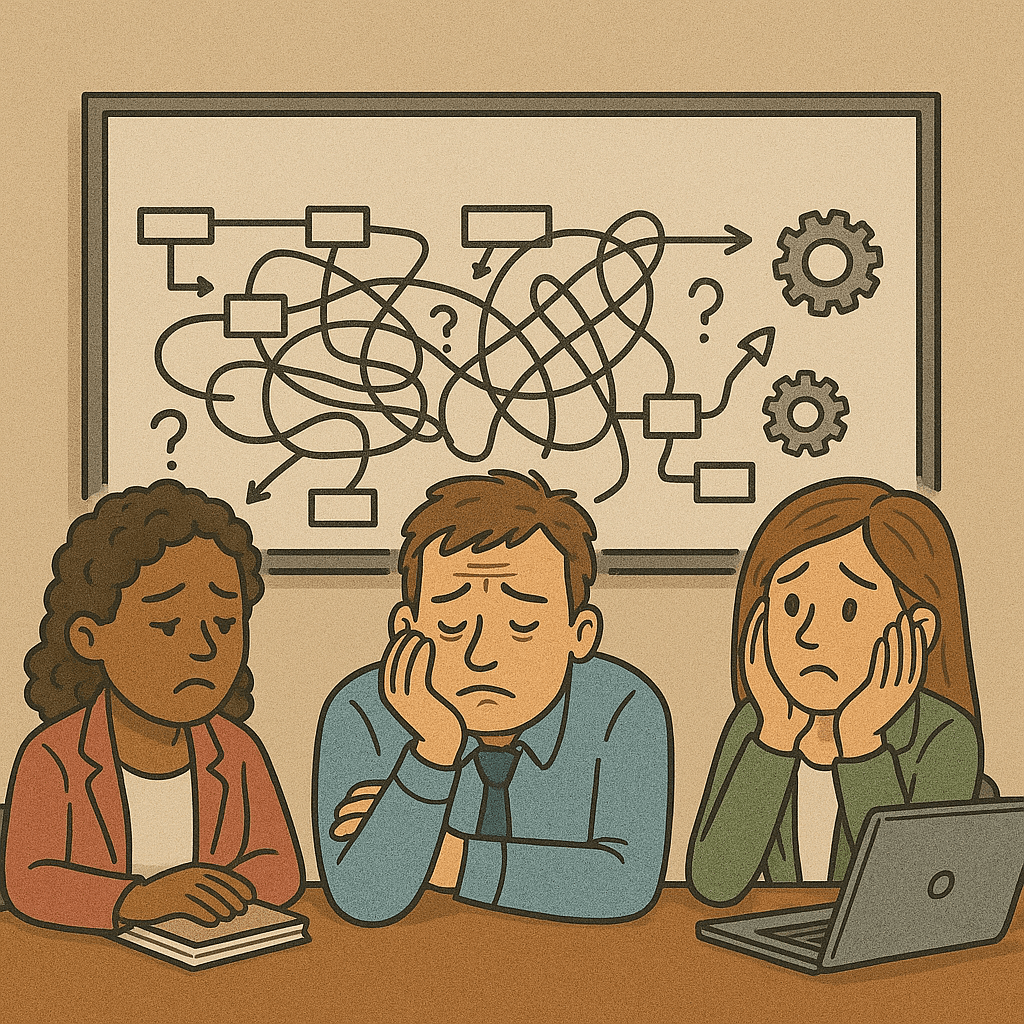
- High complexity involving advanced math, data science, algorithms, external APIs and so on; also, the development environment itself kept changing constantly with new tools, new techniques to try and new research to investigate; the team felt they were on a treadmill all the time – always running just to stay at the same spot
- Significant challenges on the data side – getting the right data, scrubbing & labelling requiring lot of coordination with customer’s domain (real estate) experts; engineers were frustrated with this part of work although they did realize that it was vital for their models; a great model would be of no use with poor data
- Very uneven work progress; sometimes, it was like two steps forward and one step backward; progress made in many iterations was not quite “visible” to potential users
Yasmin’s points made sense. The flux in the HOW could indeed be stressful and be demotivating in such a context. Many in the team simply could not adapt to such a degree of change on a daily basis, the trial & error approach and the uncertainty of outcomes.
Yasmin herself was new to this type of projects. Team motivation may be an “internal” challenge for her to address but she realized she had to get help from outside. She consulted the team, individual team members, her peer managers who had managed similar projects and senior leaders in the organization. Many valuable inputs came from a number of sources, some even from customer-side technical folks. Fortunately, it was not too late in the project for many of remedial actions. Here are the key actions taken by Yasmin and her team:
- Yasmin’s peer managers & their tech leads met the team on a regular basis and assisted with specific technical challenges
- With inputs as above, the team reviewed their model approach; starting with simpler models and learning; deferring more advanced models till later
- There was good guidance from one of the peer teams on how to improve the most common aspects of the data work – some 60-70% could be made more efficient
- The team stepped up their participation in an internal technical forum of AI engineers, quickly realizing that theirs was not a lonely battle; there were other teams in the organization in similar boats!
- Yasmin facilitated a closer working relationship with some of the more tech-savvy customer reps; the team began to engage with them on technical aspects on what worked and what DID NOT work; celebrated with them even small wins; this worked wonders for team morale & mutual trust
So, I asked Yasmin, “So, what is the consequence of all this on team motivation?”. Yasmin responded with a smile:
- The team realizes that there are no silver bullets!
- There are ample instances of successful AI projects of the same type – to gain confidence from and to learn from
- Team sees active support from Yasmin and other stakeholders; they do not feel alone!
- Data work has indeed become more efficient with improved approaches & tools and improved ways of working with the domain experts
I learned something from Yasmin that day.
Influencing team motivation does not have to be some abstruse black magic for managers. Yasmin was able to make a difference through simple actions, better practices and collaboration with peers & stakeholders. I think her active engagement with the team resulted in possibly the most significant outcome – the team’s improved self-belief.
That’s it for now. Thanks for your attention!