


Often I get asked by Scrum Masters, who are in the process of adopting Agile Scrum, on references to servant leadership. How should one go about changing from “command and control style” to “servant leadership”.
I used to share relevant examples from my experiences that has helped teams self-organize. Highlight instances, based on my observations of the Scrum Master at work, that were good examples of Servant Leadership and also point out instances of Command and Control behavior.
I came across the Seven Pillars of Servant Leadership, that captures this quite comprehensively. This idea was first mooted by Robert Greenleaf and further worked upon by James Sipe and Don Frick. This is a good reference that I share with the Scrum Masters and also their managers.
I am sure that you will be able to relate to these and find them relevant and applicable.
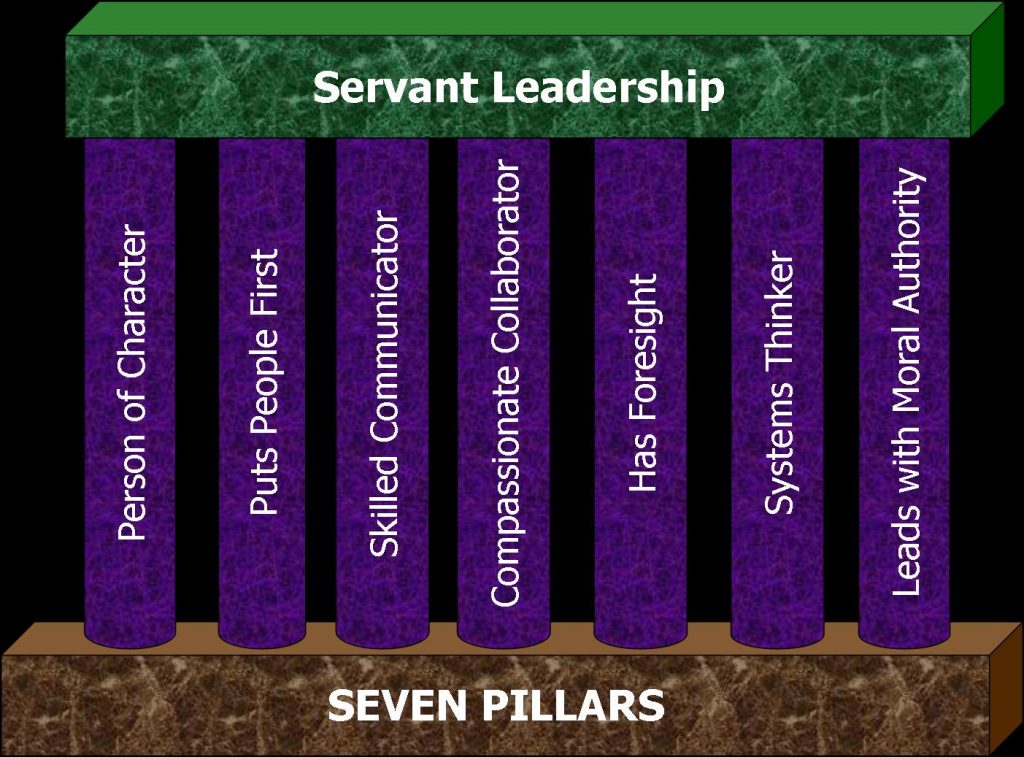
1. Person of character:
- Makes ethical and principle-centered decisions
- Maintains integrity
- Demonstrates humility
- Serves higher purpose
2. Puts people first:
- Shows care and concern
- Helps others meet their goals
- Helps others grow
3. Skilled communicator:
- Listens earnestly & speaks effectively
- Demonstrates empathy
- Invites feedback
- Communicates persuasively
4. Compassionate collaborator:
- Strengthens relationships, supports diversity and creates a sense of belonging
- Expresses appreciation
- Negotiates conflict
5. Has foresight:
- Imagines possibilities, anticipates the future
- Proceeds with clarity of purpose
- Visionary
- Takes courageous & decisive action
6. Systems thinker:
- Thinks & acts strategically, leads change effectively
- Balances the whole withthe sum of its parts
- Comfortable with complexity
- Demonstrates adaptability
- Considers the Greater Good
7. Leads with moral authority.
- Worthy of respect
- Inspires trust & confidence
- Establishes quality standards for performance
- Accepts & delegates responsibility
- Creates a culture of accountability
Do explore more by reading the books by the authors, there are many articles availbale on the internet. More in future blogs.