


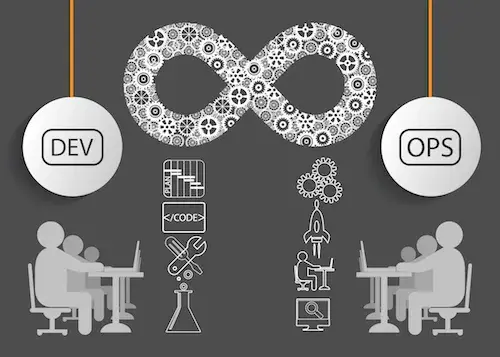
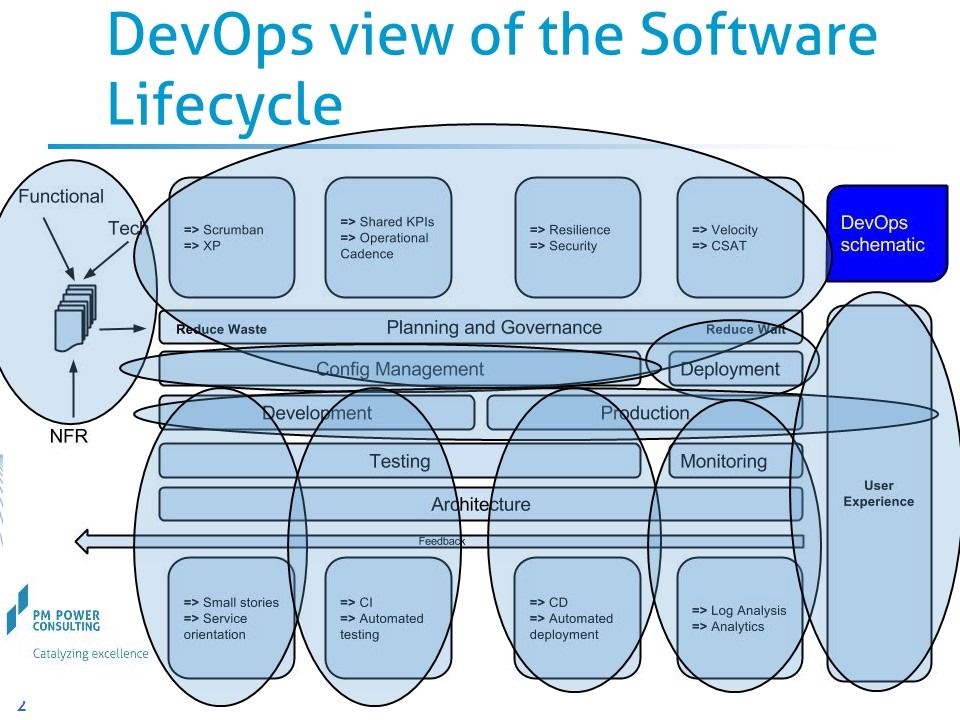
The most commonly accepted definition of DevOps is that it is a movement. There are many discussions around the approaches that would work best to adopt DevOps in a specific context. Most of these threads talk about the need for culture, automation, lean thinking etc, and those that get into a little more details in terms of the engineering practices talk about Continuous Integration or Deployment, automation of infrastructure related activities etc.
This post is about how you can easily map on the underlying principles of DevOps on various activities across the Software Lifecycle. I call it the software lifecycle – to distinguish it from the SDLC – that is essentially about the software Development lifecycle. When you take a customer centric view and are focused on delivering value incrementally and steadily – aka continuously – you need to internalize the key DevOps concepts across the various steps in a typical software lifecycle, covering both the engineering and management aspects. I usually recommend a model where we group various activities under 10 buckets. These are:
- Backlog management
- Full life cycle
- Configuration management
- Architecture
- Shifting left
- Managing the user experience: deployment
- Continuous Deployment and Delivery
- Monitoring the user experience : track and analyze
- Governance
- Feedback loops
In each of the above, there are some commonly accepted good practices as well as some anti-patterns. I have shared more details on each of these in a 22 minute recording.
Once you have understood this, you would be ready to plan your DevOps journey. We recommend a six step approach to DevOps adoption. More about that in a later post. Meanwhile, if you have any comments or experiences to share on your own DevOps journey, please reach out. Of course, if you have questions, just ask!